

In recent years, artificial intelligence (AI) has become increasingly common in the workplace. It allows us to complete certain tasks almost instantly. However, before learning how to use these tools, there is an important question worth asking: what exactly are we trying to improve?
Completing more tasks or working faster is not enough. To better understand productivity, let's distinguish between three concepts:
- Being busy means doing many things.
- Being efficient means completing a task correctly.
- Being productive means focusing on the right tasks while making good use of our time and resources.
This distinction encourages us to look beyond the number of tasks completed. A packed schedule can make us feel that we have accomplished a great deal, even when we have made little progress on our most important projects.
Emails: Saving Time and Setting Priorities
We often use AI to draft emails quickly. With clear and specific instructions, it can generate a response almost instantly. This time savings can allow us to focus on other activities.

However, if we respond immediately to every request, even those that could wait, be delegated, or be grouped together, we may be spending our most valuable time on activities that are not priorities. Writing faster does not solve the problem of prioritization.
A more productive approach is to use AI to organize requests according to their urgency, importance, the person responsible, and the decisions required. We can then review this classification, respond to priority messages, and prepare templates for recurring requests.
I may respond to fewer emails immediately, but I preserve time for a strategic project or to support my team.
Importance Should Guide Our Priorities
The well-known Eisenhower Matrix is a simple tool for thinking about how we allocate our time. It divides tasks into four categories:
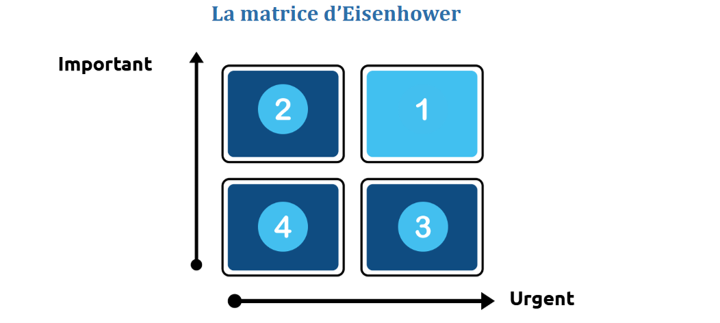
- Urgent and important: Do.
- Important but not urgent: Schedule.
- Urgent but less important: Delegate or simplify.
- Neither urgent nor important: Postpone or eliminate.
AI can support this process by analyzing a task list, comparing it with our objectives, and suggesting activities that could be simplified, grouped together, or delegated. It can also highlight those that appear to have the greatest impact.
However, AI needs context. Without knowing our objectives, responsibilities, and constraints, it cannot accurately assess the importance of a task. Its suggestions must therefore be reviewed and adjusted.
Here is an example of a prompt:
Here are my objectives and my task list. Identify the tasks that contribute most directly to achieving my desired results. Explain why and point out any information you need to make a more accurate assessment.
Two Questions to Ask Before Using AI
Is this task really worth my time?
Consider its importance, urgency, and contribution to the results you want to achieve. Can it wait, be assigned to someone else, or be eliminated?
Where can AI provide meaningful benefits?
Look for tangible improvements: time saved, better quality, greater clarity, or fewer errors. The benefits should support the work that needs to be done.

Productivity begins with choosing the right priorities. Using AI effectively means improving the way we work while maintaining control over our decisions. Before trying to automate more tasks, let's take the time to define what truly matters.
Develop Your Team's Skills and Support Their Well-Being
Improving productivity involves both developing professional skills and creating a healthy work environment.
Objectif Emploi supports organizations through its corporate training programs, which help employees develop their professional skills, and its Employee Assistance Program (EAP), which provides support tailored to the needs of employees and organizations.
Explore our services for employers and contact our team to learn more.